Showing posts sorted by relevance for query clap for that wrap. Sort by date Show all posts

Clap for That Wrap: "The Wrap Life" Yendi Wrap Review

Flashback Summer: Clap For That Wrap - The Wrap Life Headwrap Review

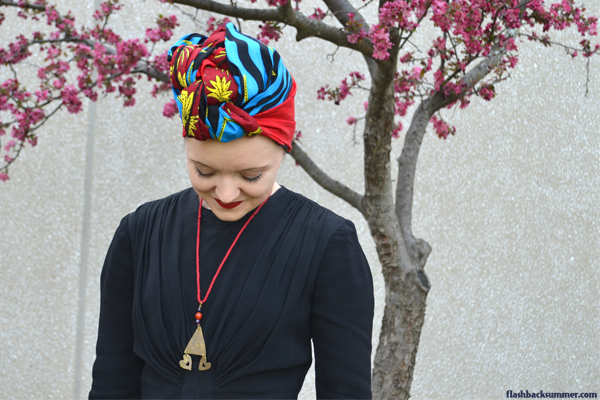
I've been loving our discussions about head wraps and learning about others' styles, and today I'm sharing with you guys a wrap-leap I've taken for my own style: I bought my first West African style head wrap!

I found out about The Wrap Life shop through some vintage friends, and it came highly recommended.  After freaking out over the gorgeousness of their IG feed and website for an embarrassingly long time, I decided it would be worth the money to try out one of their beautiful wraps.

Their store is stocked with African style head wraps from the western and southern parts of the continent along with more "culturally neutral" styles in ikat, floral, and even light denim fabrics.  There are SO many pretty options!  I was also delighted to find out that their prices are affordable, ranging from $22-$34. (Here's a sampling of their wares:)
Flashback Summer: Clap For That Wrap - The Wrap Life Headwrap Review

I ended up buying the Yendi wrap, and it shipped quickly from their store in New York.  When it arrived and I opened it... SWOON, the packaging made me melt!  Exquisite photos and encouraging messaging that, needless to say, is not the type of packaging you immediately throw away.  These suckers are hanging in my sewing room because they are just too darn pretty!

Flashback Summer: Clap For That Wrap - The Wrap Life Headwrap Review

I'll be honest with you guys, I've never bought an African head wrap because I personally felt weird about it.  I knew that giant head wraps are things specific to certain tribal groups, such as the gele in Nigeria, and I didn't feel comfortable sporting an item from a culture I really don't have a connection to.  I lived on the opposite side of Africa, and though they get lumped together a lot... the cultures across the continent are really quite different from each other.  Where I lived, head wraps were worn in an Islamic context and looked nothing like these.

Flashback Summer: Clap For That Wrap - The Wrap Life Headwrap Review

However, the more I've learned about these styles of wraps, the more I've been able to distinguish between tribal-specific styles and prints and wraps that are more "generic" and worn by many African peoples.  I took the leap with this more generic print.

Flashback Summer: Clap For That Wrap - The Wrap Life Headwrap Review

It took me many video tutorial views and much wrapping practice to even get to this point, ha!  Like I said, most of my experience with head wrapping stems from either vintage or more Islamic styles, neither of which use long, stiff, rectangular scarves like these.  Also, Islamic styles tend to utilize straight pins more often to achieve pretty tucks, folds, and shapes, while these more West African style wraps achieve a secure fit through tucking and sometimes knots.  Major learning curve!

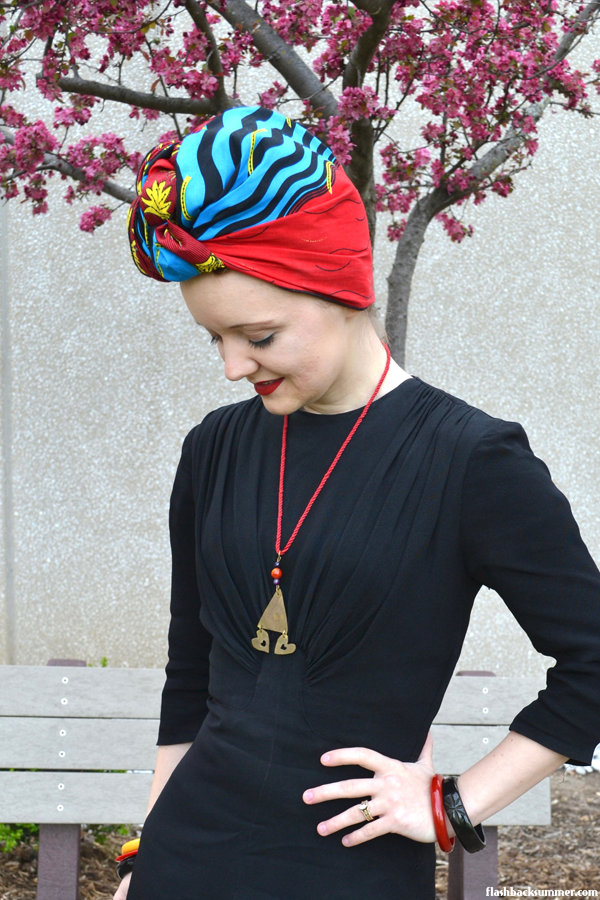
I finally managed this wrap, though I'll admit... I still needed to use a couple straight pins to get it to stay and lay right.  I'll be practicing....
Flashback Summer: Clap For That Wrap - The Wrap Life Headwrap Review

For me, when it comes to styling an African wrap, I will probably not wear an African wrap with an African garment at the same time, even if it's one I've made.  It's not a decision that I make on moral grounds or anything; it's just my personal stance (barring, of course, cultural occasions like weddings where full garb may be appropriate).  While I have ties to Africa and lived there (albeit in East Africa) for a couple years, the combination of both an African head wrap and an African garment feels too African for me.  While my life experience has twinges of Africa, I am not ethnically African, nor did I grow up there.  I want my style to reflect who I am, and putting on too much Africa all at once feels contrived and inauthentic to me.  Who I am has twinges of Africa, so my wardrobe does, too.  

Flashback Summer: Clap For That Wrap - The Wrap Life Headwrap Review

Flashback Summer: Clap For That Wrap - The Wrap Life Headwrap Review

Thus, I paired the wrap with a 1930s/40s dress and 1940s heels, bakelite, blue eyeliner (also a first!) and a necklace from my part of Africa.  It's Nubian, and in Nubian art triangles represent your heritage and the past. This necklace says that I am proud of where I've been and the people who have made me who I am.

It's a little African, it's a little vintage, and it's all me.

Have any of you bought a wrap from The Wrap Life?  What's your favorite wrap in their store right now?

Related Posts:

This post is not affiliated with The Wrap Life in any way and is not a sponsored post.  All opinions expressed are honest and my own.

Clap for that Wrap: Head Scarf Types

How exciting, the first post in this Clap for that Wrap style series!  Many of you commented about your interest and trepidation in trying out more head wrap styles for yourselves in the introduction of the series, and I hope as time goes on that we will each learn more about the diverse reasons for head wrapping and scarf styles that will fit our personal aesthetics.

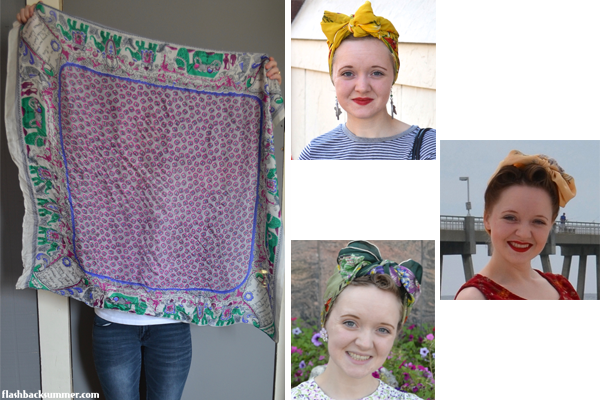
For this first post, I'm going to go over some of the types of scarves that are good for head wrapping and the styles they can create.  I wear headscarves to work ALL the time, and many people are surprised to find what the actual shape of the scarf is, since it's difficult to tell when it's wrapped. Today I'll show you a few different kinds.  Although this is by no means an exhaustive list of head wrapping scarf sizes and shapes available, these are some of the most common, especially when it comes to vintage Western styles.  


I'll have tutorials for many of these styles in future posts, but this will give you ballpark expectations of what head wrap styles work for which scarves. 


Flashback Summer - Clap for That Wrap: Vintage Head Scarf Types - headwrap

1. The bandana

This, it seems, is what most people connect with vintage head wrap styles (think Rosie the Riveter).  They're widely available and inexpensive, and they come in a huge variety of colors and patterns.

These are a staple for me in my head wrapping, but I use them largely for utility or quick styles, like for cleaning or when I'm short on time.  Since they're comparatively small, there's usually just enough fabric to wrap your head and tie a knot, but not enough to do anything fancy like a ginormous bow or flower.


Flashback Summer - Clap for That Wrap: Vintage Head Scarf Types - headwrap

2. The triangle

This is very similar to the bandana, but they are often larger than a bandana folded in half.  They are still usually made of more utility fabrics like cotton.  While in vintage days they tended to serve purposes like covering pin curls or protecting hair from dusty work, both the bandana and the triangle scarves can be dressed up with pretty hairstyles  like victory rolls and poodle curls. 


Flashback Summer - Clap for That Wrap: Vintage Head Scarf Types - headwrap

3. The large square

A large square scarf, on the other hand, is useful for a large variety of styles.  You can keep it simple and tuck in the ends for a utility look, you can do giant bows. There are lots of styles available with these!

A square scarf that measures around 24" or larger works best.  While many vintage square scarves can be found, lots of new ones are also sold in Islamic hijab shops.


Flashback Summer - Clap for That Wrap: Vintage Head Scarf Types - headwrap

4. The pashmina/rectangle

This is the kind of scarf you're most likely to find in modern stores these days.  The long, rectangular scarves come in a variety of fabrics, but thinner, lighter ones work best for head wrapping so they aren't too heavy on your head. Scarves with pretty trims or fringe can also add some pizzazz to your wraps. Pashmina scarves are also commonly found in hijab shops.

Unlike the scarves commonly found in Western stores, there are also rectangular fabric pieces that are made specifically for head wrapping.  They may match the fabric of an outfit, as is common in West African looks, or they may coordinate in color.  While these fabrics may be stiff and not good for neck scarf wearing, they work brilliantly for head wraps!


Flashback Summer - Clap for That Wrap: Vintage Head Scarf Types - headwrap
Left picture source, right picture source
5. The pre-sewn
Sometimes a head wrap isn't really fabric wrapped around the head at all.  Sometimes it's actually pre-sewn onto a base or into a certain shape.  Many more complicated-looking vintage turbans and wraps are actually pre-sewn and more like hats, so keep that in mind if you're trying to reproduce them.  Other headscarves are sewn in some places but still require being tied in other places to look right, like this 1940s duster cap I have on in the picture above.

Do you want more head wrap style inspiration throughout the week?  Check out my head wrap Pinterest board!


If you're interested in contributing to this series, email me!

Clap for That Wrap: Interview with Verily Merrily Mary

Yay, it's Clap for That Wrap Wednesday!  As I continue to do this series on Wednesdays, I hope to highlight more wrap wearers and to explore their cultural and fashionable wrap styles.  I will be interviewing women from all different countries and cultures, and today I'm starting with Mary of Verily Merrily Mary, a Nigerian-Canadian-American Third Culture Kid that really rocks her wraps!  (And all the pictures are from her IG feed!)


Which countries have you lived in, and which country (or countries) does your family tree hail from?
I have lived in Nigeria, Canada, and the United States but my family’s roots are in Nigeria. 

How often do you wear head wraps?
It depends on the hairstyle. When I am wearing my afro out or a short braided style, I wear them more often (2 times or more per week). I think I do this because it sits on my head more easily. But my hair is currently in long, thick twists so I haven’t worn a head wrap in months. 


What significance do head wraps have to you? Do you wear them for utilitarian reasons and/or cultural reasons?
Oh, it’s both utilitarian and cultural for me. When you spend so much of your childhood ashamed of your African identity due to being picked on about it, it empowering to sport your African fabrics as an adult who is extremely proud of her heritage. I am more drawn to neutral tones in clothing but a vibrant headscarf can be a wonderful icing on the cake on a more “quiet” outfit. Headscarves and head wraps are also cleverly beautiful ways to hide my bath hair days.


What makes a head wrap particularly Nigerian/African/West African?
(ex: Is it the print, the wrapping style itself, fabric, a matching outfit, etc.?) 

The fabric used and the way it is worn can play into whether or not a head wrap style is authentically African. Sub-saharan African print is quite distinct to me. There are some widely known prints like Kente cloth from Ghana and Ankara from Nigeria. Both are known for their vibrancy in color. The Kente cloth alternates between two types of fabric per row, often using yellow and other bright colors and patterns. Ankara is a bit harder to explain because there are nearly countless variations of the print. But the feel of them are the same: colorful yet not overbearing.

There is one head wrap common in Nigeria called a Gele. It is worn by women only during special occasions like weddings and other major celebrations and ceremonies. The fabric used for the Gele is usually ornate and quite firm, allowing the wearer to pin and manipulate the fabric to her liking. It is so gorgeous and it kind of reminds me of a rose.


Are there any ways that non-Africans/Nigerians/West Africans can take inspiration from your culture’s head wrap styles without stealing them?  

One thing Westerners and Western culture can do is stop acting like they found a novel fashion piece whenever they are rocking African items, head wrap or otherwise. It happens so often and is so offensive. Arbitrary “tribal print” headscarves and clothing sold in stores like Forever 21 sometimes have them with patterns that are African and, of course, Africa is not given the due credit when it is advertised. It’s just a cool “new” trend. Knowing the history of the continent and how it has been (and continues to be) pillaged and colonized, the very least they can do is acknowledge and respect the origin of those fabrics and buy from African designers. At the end of the day, people are going to do what they want to do, but I would prefer that non-African people wear African fabrics for reasons other than “it looks cool.” That will challenge people to actually research the history of what they are wearing, perhaps even to the point that they would rather not wear it out of respect. When in doubt, my advice is to wear the fabric if you’re invited by someone in the culture to do so (wedding, etc.). 

Have you learned something new in this interview with Mary?  Does her insight change or affect your own personal wrap style?

If you would like to share your wrap style in the Clap for That Wrap series, just shoot me an email!  I'd love to hear from you!

Controversial Post: Who Can Clap for That Wrap?

As we've been going through the "Clap for That Wrap" series, I've noticed that some of you have expressed trepidation at trying new head wrap styles because you're afraid of culturally appropriating styles from other cultures.

I won't lie, I find this interesting, and I'm ashamed I didn't think it enough of an issue to address right off! But, hey, better late than never, right?  Let's dig into this together!


@flashbacksummer
Two things I think we can all agree on to start (or the vast, vast majority of us at the very least can agree on), is that 1.) The question is not whether or not each of us can or cannot wear head wraps, but which head wraps we can rightly wear, and 2.) Religious head wear (such as specifically Muslim or Sikh styles) should only be worn by the people adhering to those religions or ideals.

Now that we've got that settled, let's get into the not-so-clear part of head wrapping: Who can wear which wraps?


I didn't feel I could bring as well-rounded and diverse a viewpoint that this discussion requires, so I asked for the opinions of others to aid in the discussion.  I've also pulled quotes from articles on the subject and included a few more resources at the bottom for your further reading enjoyment and learning!


@flashbacksummer
What are we afraid of?

"I wonder about the history of some vintage styles. They have definitely been inspired by cultures other than dominant Western ones, and even if I'm referencing vintage style, I wonder about cultural appropriation."  - Kim Koin


I think most of us are afraid to try certain wraps we're unsure of because we don't want to insult people.  We don't want to appropriate from other cultures, and we do want to respect other people groups.  We don't want to act out of ignorance and hurt others.  I hope Dasha's words will encourage you as we go further:


"But the fact that we all pause and think, 'How can I do this [headwrap] justice?' is a step in the right direction, as opposed to blindly doing things without facing our own ignorance... We're all trying not to offend each other."   - Dasha Guyton


"... head coverings will always have a place in society." - Dasha Guyton

Discussion is important, and just asking the question is a show of maturity and awareness.


What wraps are in question?


Most of us probably don't have a problem with anyone wearing a "Rosie the Riveter" style wrap or such styles that are just plain "vintagey" and Western or worn for utility.  From what I can tell, many wraps in question for you guys are inspired by black/African (differentiating between these is a whole other conversation we won't get into!) or even Middle Eastern styles.  The way the fabric itself is wrapped may be the "iffy" part for some of us, or sometimes the print on the fabric (such as kente cloth or wax prints) may make some of us feel uneasy about trying them.  We may even be concerned after watching wrap tutorial videos if the person in them doesn't look like us.  


Who needs to question their wrap styles?


Unless you can clearly, unambiguously connect yourself to a particular wrap style as far as culture or history goes (such as being a Nigerian wearing a Nigerian wrap), then you should do an evaluation before wearing.  This evaluation is not limited to a particular race, culture or people.  Anyone borrowing a wrap style that can be attributed to another culture should ask themselves if it is alright to wear, just as a starting point. The answer may differ from situation to situation or person to person, but most of us are going to need to start by asking, "Am I the person to wear this wrap?"


So how do I evaluate?


"El-Amin Naeem argues that the practice of headwrapping came before some religions, for practical reasons, such as keeping hair clean and blocking sand from the nose and mouth. 'No one group owns it. You decide for yourself,' El-Amin Naeem says." - from this article


"You decide for yourself." - Zarinah El-Amin Naeem
My top 5 tips for deciding which head wraps to wear:

1.  Do research.  Is this wrap style originating from a certain people group, religion, or era?  Does the fabric's print have a name or signify something?


2. If it originates from a certain group, has that group expressed their opinion on "outsiders" wearing the style?  Is there someone from that people group you can ask for insight, or articles that may share their thoughts on it?  (If you discover through several resources that they really don't want "outsiders" wearing it... don't do it.  If it seems ambiguous, use your best judgement and keep evaluating with the questions below.)


3. Are you at least knowledgeable enough about the wrap or fabric to be able to converse about it and show a basic understanding of its roots?  Honestly, if you aren't willing to do a five minute google search on a wrap or fabric that belongs to another culture, you don't deserve to wear it. Yep, I'll be that blunt. 


4. If it's not exactly a traditional wrap, is it a version "inspired by" or very similar to a wrap claimed by a cultural group?  Is there a version you can buy that would support the community it originates from?  If not, are you willing to support a company that has knocked it off without giving credit?


5. What do designers say?  Look at shops that sell head wraps.  Do they feature anyone that looks like you wearing their products?  If not, is there any information on their social media profiles or website that express their views on people outside their group buying and wearing their products?   (I found this IG post from the feed of @thewraplife to be a good example.)


6.  Do you ROCK IT?!  After all the evaluating, this is the question it all comes down to... Does it flatter you?  Do you feel downright amazing in it?! If so, rock it!


While I have my ways of evaluating for myself which wrap styles I wear, I also wanted to share some tips and thoughts from others on how they decide what wraps they should and should not don:


"Head wraps have existed in all cultures for aeons, but we have to be mindful that cultural relativism actually shifts over time. What projected one way decades ago projects in another today. I think it's today we are concerned with, not yesterday--even as this is a vintage clothing discussion site. We don't live in the past, and regarding racism and sexism, we sure as hell wouldn't want to."

- Robin Edgerton

"IMO, as long as you are not wearing a culturally significant textile or wearing a religious turban, I think it's ok to wrap a scarf or fabric and tie it on your head. I generally stick to solid fabrics or pattern scarves that are in no way culturally tied."  

- Aly Rose of Aly Rose Vintage


Mary of Verily Merrily Mary
"One thing Westerners and Western culture can do is stop acting like they found a novel fashion piece whenever they are rocking African items, head wrap or otherwise. It happens so often and is so offensive. Arbitrary 'tribal print' headscarves and clothing sold in stores like Forever 21 sometimes have them with patterns that are African and, of course, Africa is not given the due credit when it is advertised. It’s just a cool 'new' trend. Knowing the history of the continent and how it has been (and continues to be) pillaged and colonized, the very least they can do is acknowledge and respect the origin of those fabrics and buy from African designers. At the end of the day, people are going to do what they want to do, but I would prefer that non-African people wear African fabrics for reasons other than 'it looks cool.' That will challenge people to actually research the history of what they are wearing, perhaps even to the point that they would rather not wear it out of respect. When in doubt, my advice is to wear the fabric if you’re invited by someone in the culture to do so (wedding, etc.)."
- Mary of Verily Merrily Mary


@alyrosevintage
"It can be done right by doing your homework. If I'm going to showcase my love for Indian culture, African culture etc, I'm going know the appropriate names and origins. This doesn't mean I don't have the right to style it or wear it in a nontraditional way but being prepared to say, 'Oh thank you, I love this kente print too,' as opposed to saying, 'African,' shows your respect for its roots...
[Black women], too, have to ask ourselves if it would be offensive to our culture or anyone else's. After all, Africans and African-Americans have a tumultuous history. We have to face the elephant in the room and ask ourselves if we are selling out by mimicking the style of ancestors who sold us into slavery?"
- Dasha Guyton

"I don't think it's appropriation if you are not wearing a religious turban, and you are taking care to wear an ethnic wrap with respect to the culture. Especially if you're supporting the local designers of color.  Rock your head wrap!"  

- Nisha Miles

"Don’t wear a wrap just so you can say you’re 'pro-black' or something… Don’t do it because you have a political reason.  Do it because you really like it, because you appreciate the ability it gives you in creating a new look for you."  

- Aziza Lynn, aka "The Bargain Beauty"


"The bigger the knot, the better you feel." - Aziza Lynn, aka The Bargain Beauty
"It's hard to decide what is appropriation and what is not, especially in the arts (fashion included) because being influenced by other ideas and cultures is natural. I think one of the big red flags that we can all agree on is taking culture (in this case fashion) from another culture and using it without regard for the context or claiming it as your own. Women from all over the world and from many parts of history have used a variety of wraps and ties all throughout history to keep their hair neat and off of their neck, as well as for religious and modesty reasons. I think the head wrap is a challenging issue because it's not strictly used by one culture or only for religious dress. I'm not sure what the right answer is for head wraps, but it seems to me like the fact that we're having the conversation means that everyone's intentions are in the right place."  
- Allison Dyke

So, readers, what about you?  Are there head wrap styles you feel nervous about trying?  How do you decide which wraps to wear?  Has any of these people's insight changed your thoughts on what you would wear?


Extra reading:

How A Head Wrap Taught Me An Important Lesson About Professionalism And Race
The Curious History of "Tribal" Prints
IG conversation on @thewraplife feed
Black America, Please Stop Appropriating African Clothing and Tribal Marks
In Order for Black Americans to Appropriate African Culture...
Culture Is Not Costume
Under wraps: Style savvy Muslim women turn to turbans
You're Wearing That Out?: My Family's Disdain for Headwraps and Why I'm Embracing Them
The African American Woman's Headwrap: Unwinding the Symbols

Introducing... Clap for that Wrap Style Series!

Flashback Summer: Clap for that Wrap style series - head wrap, head scarf

It must be pretty obvious by now that I love head wraps/ headscarves/ fabric stylishly wound around my head.  It comes from both my love of easy vintage looks and the time I spent in East Africa surrounded by ladies that rocked head wraps for religious, cultural, and style reasons.  I was hooked!

I want to make some space on this blog to showcase and celebrate the head-wrapping creativity of my readers and the vintage community, and I'm calling it the "Clap for that Wrap" series!  I'll be posting every other Wednesday to begin with, and posts will include head wrapping tutorials, style inspiration, history, and tips from various people. 

I'm also going to feature head wrap photos on Wednesdays, and I'd love to share yours!  If you have a head wrap style you're especially proud of, tag it with #FSwrapclap and I may feature it on my personal Twitter and/or Instagram account!

If you would like to be featured in a Clap for that Wrap Wednesday post, feel free to email me with your post idea and a sample picture, and we'll see if we can get you scheduled in!  I can't wait to see the unique wraps you guys wear!

My Instagram: @flashbacksummer
My Twitter: @EmileighRogers

Clap for That Wrap: Fruit Wrap


My husband and I had a bit of a "treat yo'self" Valentine's Day, and it included eating dinner at a new swanky hotel in town called Hotel Vandivort.  I took these photos in the back corner of the hotel, and how cool is it?!  


Anyway, it's Clap for That Wrap Wednesday, so on to the head wrapping!  This wrap is very similar to my giant bow wrap, but instead of completing the bow, I just tie a knot and tuck the ends under in the front.  I left some pin curls out, and then I put some fruit on top!  I pondered it one day, tried it out in front of the mirror... and I love it!!!


These fruits came pinned on a 1970s blazer I bought, and I'm honestly not sure what they are.  They're not attached to a brooch back; I've just safety pinned them on.  Millinery bits perhaps?  Either way, the colors coordinate perfectly with this headscarf, and I love the summery fun they've added to this winter outfit!


When you try a head wrap, don't just limit your style to the scarf itself.  Add-ons such as fruit, flowers, brooches, and other bits and bobs can add some serious style!

Outfit details
blouse: handmade by me
skirt: made by me
scarf: thrifted
shoes: 1940s from OLL

Have you worn anything on your head wrap like fruit or flowers?  If you have a picture, please link to it below or tag it with the hashtag #FSwrapclap!  I'd LOOOOVE to see it!

Clap for That Wrap: Giant Bow Tutorial

Flashback Summer: Clap for That Wrap style series - 1940s bow scarf

MY, what difficulty I had with this video!  I'm having major troubles with my video editing program, so while this tutorial video is not my best work, it will explain how to tie this awesome bow head wrap!

If you have any questions, leave them in the comments below and I'll do my best to answer them.


Would you guys ever try this style?  If you have or you do in the future, I'd love to see it!

And don't forget to use the hashtag #FSwrapclap!  I repost several tagged pictures every Wednesday to share the vintage community's head wrap creativity!

"God Is Good" Khanga Dress


Mungu ni mwema kwa watu wake.

For the past several months, I have been praying that God would send African families to our intercultural church.  We have people from all over the world, but we didn't have any families from the continent of Africa. It felt like our church family was missing something.