

Showing posts with label intercultural fashion. Show all posts
Desert Nomad Dress
05 November 2017
Sunflower Abaya Refashion
12 September 2017
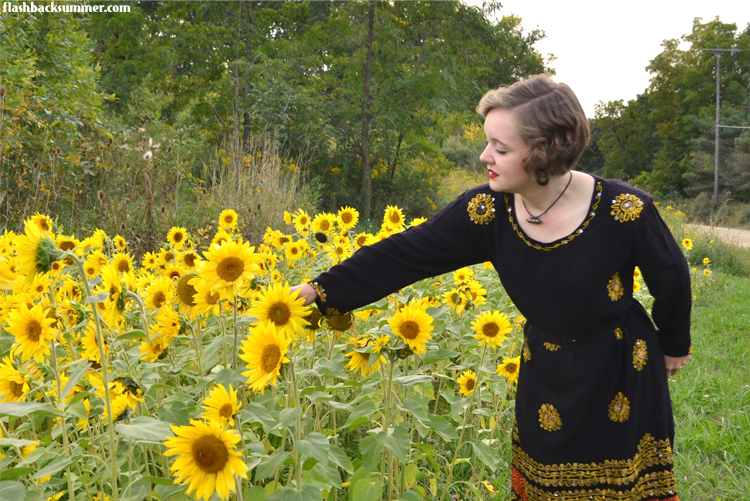
Although I lived in Sudan about seven years ago, I still have a few garments from there that I've kept. They're sentimental and remind me of one of the most adventurous, most learning-filled times in my life so far. They're also traditional garments worn by Muslim women in Sudan. A couple of the garments I own are tobe, and one of the others I'm sharing today is an abaya, a long robe.
Collaboration Outfit Fashion Photos
16 June 2017
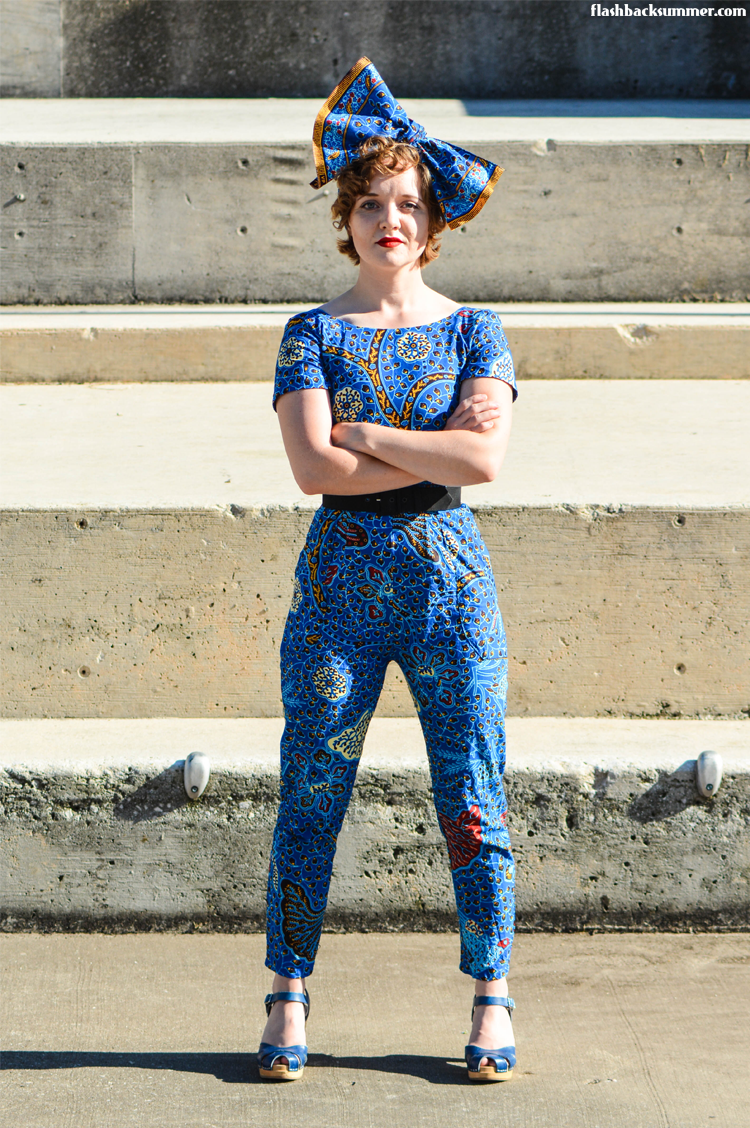
4 Tips for Mixing Vintage & African Style with Ankara & Lace
13 June 2017

Our world is increasingly global, and we have the glorious opportunity to buy clothing from designers hailing from all over the world! Whereas our foremothers were relegated to buying such fashions only if they could afford to go to resorts and buy a vacation wardrobe inspired by local aesthetics, we now have the chance to incorporate the beauty of diverse designers into our own wardrobes at a single click! Today I'm partnering with Ankara and Lace, an African fabric subscription company, to help explore how to do this.
Interview with Kimi: Kimono & Vintage
25 October 2016

10 New Scarves to Add to Your Wardrobe
29 May 2016
I've been having fun trying out new wrap styles with different shapes and sizes of scarves, but my go-to favorite is the giant square scarf. It's super easy to turn into a vintage style wrap, and they're often made of light, breezy materials that are perfect for the warmer weather we're now experiencing in the Northern Hemisphere.
But let's move beyond the easy-to-find floral vintage ones and find some statement scarves, shall we? Modern square scarves are in great condition, and you don't need to worry about them as much as you may vintage ones, especially the silk ones. I also consider them special pieces that I, personally, would spend more money on than the vintage florals I typically thrift. The vintage scarves we thrift now were once pricier, and I'd love to add unique, quality scarves to my collection that will last as long as those have!
Here are ten of my favorite modern square scarves that would be fantastic additions to a vintage look:
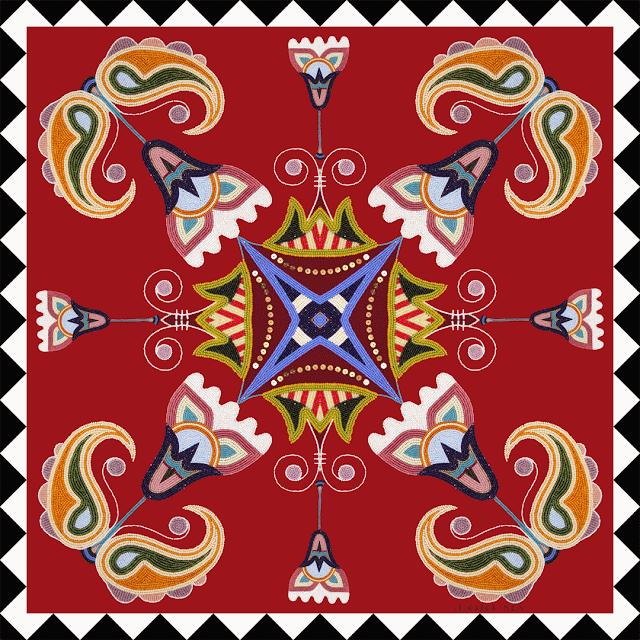
Plateau Florals Limited Edition Silk Scarf
J. Okuma - $200
Now, kids, this is what we call "wearable art," and it deserves the higher price tag. The scarf is a print of beaded pieces made by the artist. It's 100% silk satin and has the hand-rolled hems that we vintage lovers adore!
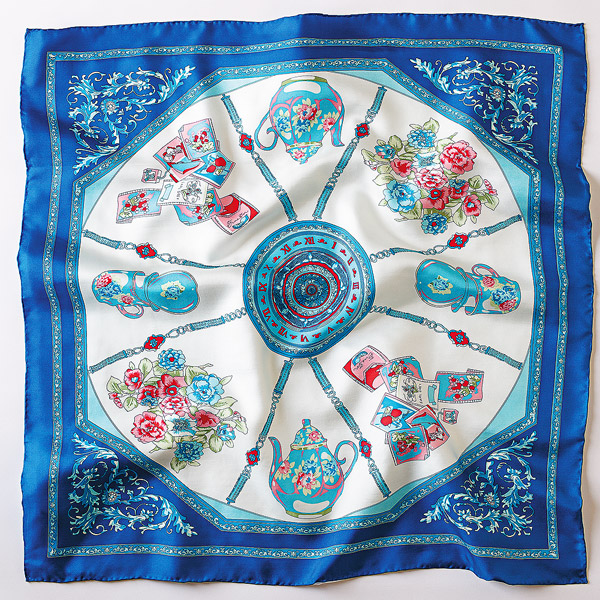
Silk Tea Time Scarf
Smithsonian Museum Store - $40
Hello! It's a TEA scarf! Need I say much more?! This 100% silk scarf has tea pots, flowers, and tea bags surrounding a Roman numeral clock with a definite vintage vibe. I don't know about you, but I definitely love tea enough to wear it as an accessory.
 Diné Bizaad (Navajo Language) Colors Bandana
Beyond Buckskin - $15
This 20"x20" bandana features street art from Navajo artist David Sloan. It has doodle-type drawings paired with corresponding Navajo words. It's 100% cotton, comes in a lot of colors, and can add a fun edge to vintage looks. (Can't you just see it tied Rosie style with overalls?!)

Dehn Spring in Central Park Scarf
The Met Store - $55
It doesn't get better than this! This silk crepe de chine scarf is a print of a 1941 watercolor by artist Adolf Dehn. It features iconic New York architecture and ladies in fantastic hats going for a stroll in Central Park.
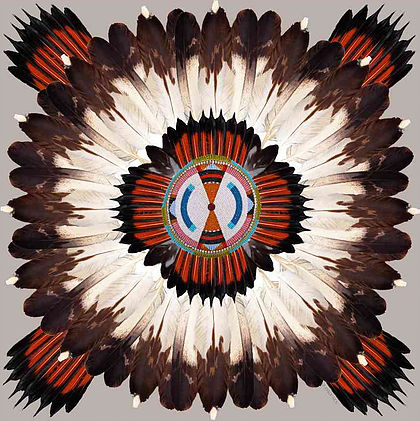
Feathered Limited Edition Silk Scarf
J. Okuma - $200
This is another gorgeous wearable art piece. Featuring eagle and flicker feathers surrounding a beaded motif, this 100% silk satin scarf would be an amazing, culturally-sensitive accessory that would go perfectly with vintage Western looks. There are ways to wear feathered head coverings and support the Native community, and this is it!
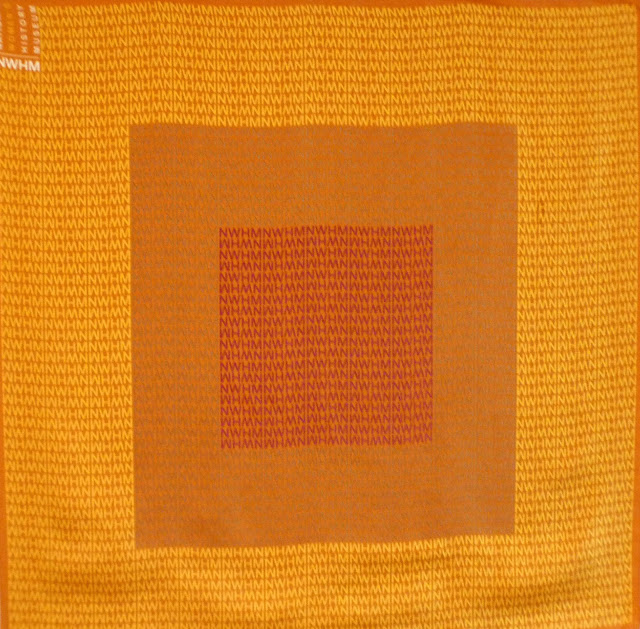
NWHM Scarf
National Women's History Museum - $100
I include this scarf not as much for its aesthetic appeal (though some people like orange) as much as for the opportunity to be a part of something awesome. With a $100 donation to the creation of the National Women's History Museum, you'd be a part of establishing the first women's museum in any nation's capital. It's time our story was told, right ladies?!

Shandra Smith Designer Scarf
Shandra Smith - $64
Smith offers several 36"x36" scarves in her shop, and her painterly style uses bold, bright colors in unique designs. This one was one of my favorites, and you have the option of choosing which fabric it is printed on. Think of how many outfits this bright scarf could coordinate with!
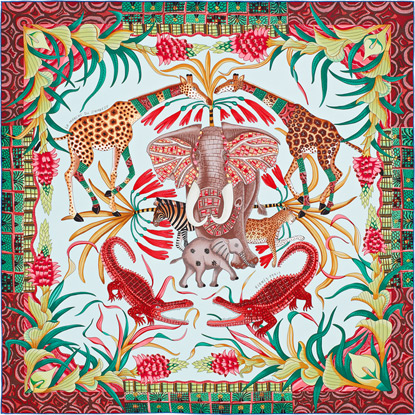
La Marche du Zambèze Scarf
Hermes - $395
Okay, so with a price tag like that, this one is mostly for drooling over and staring at online. However, I thought it was especially awesome because it's part of a line of scarves formed out of a collaboration between Hermes and a South African art collective called Ardmore. The artists reinvent traditional styles, and scarves like this are the result! Pretty cool, huh?
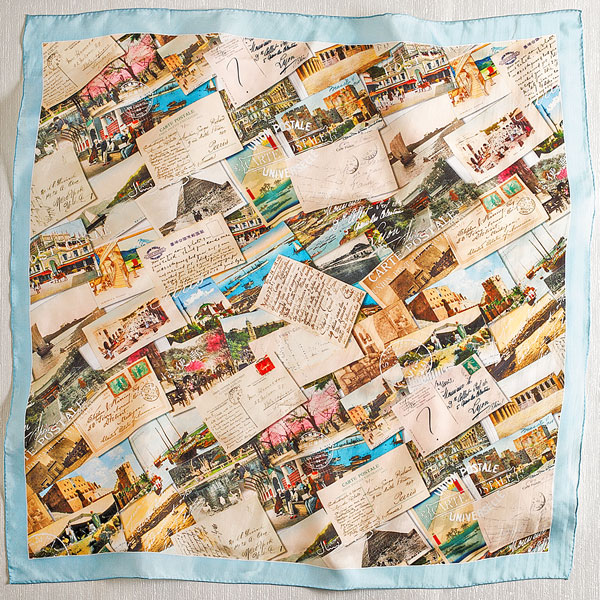
Traveler's Eye Silk Scarf
Smithsonian Museum Store - $60
This awesome print is made of vintage postcards included in The Traveler's Eye: Scenes from Asia exhibit. It has handwriting, stamps, postage marks, and hand-tinted scenes found on the old postcards in the collection. It's 100% silk and comes with a museum provenance card!
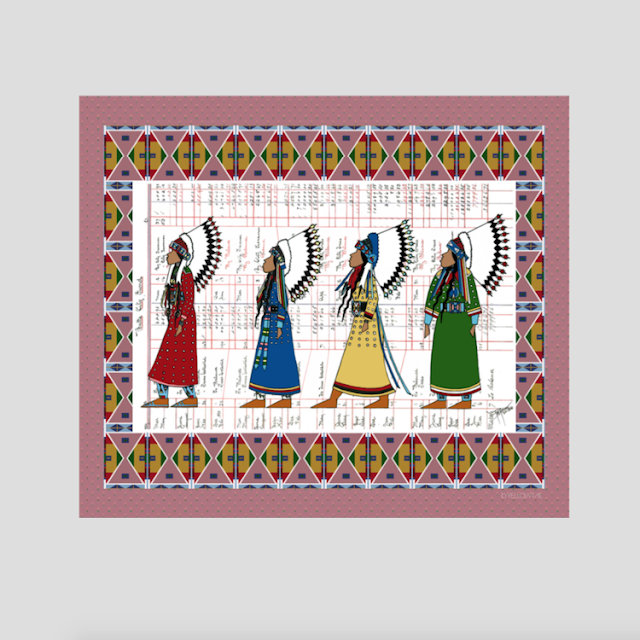
Women Warrior Ledger Scarf
B. Yellowtail - $145
This scarf commemorates a Shoshone warbonnet dance, the only time when females don the traditional warbonnet in Plains cultures. The print is a collaboration with Native artist John Pepion and honors the young leaders of their indigenous nations. It's 100% chiffon and is made in the U.S.A.!
So which one is your favorite? If money were no object, which would you pick? Do you have any other favorite modern scarf sources?
I have not been compensated for including any of these scarves. I just thought they were awesome and wanted you to see!
But let's move beyond the easy-to-find floral vintage ones and find some statement scarves, shall we? Modern square scarves are in great condition, and you don't need to worry about them as much as you may vintage ones, especially the silk ones. I also consider them special pieces that I, personally, would spend more money on than the vintage florals I typically thrift. The vintage scarves we thrift now were once pricier, and I'd love to add unique, quality scarves to my collection that will last as long as those have!
Here are ten of my favorite modern square scarves that would be fantastic additions to a vintage look:
Plateau Florals Limited Edition Silk Scarf
J. Okuma - $200
Now, kids, this is what we call "wearable art," and it deserves the higher price tag. The scarf is a print of beaded pieces made by the artist. It's 100% silk satin and has the hand-rolled hems that we vintage lovers adore!
Silk Tea Time Scarf
Smithsonian Museum Store - $40
Hello! It's a TEA scarf! Need I say much more?! This 100% silk scarf has tea pots, flowers, and tea bags surrounding a Roman numeral clock with a definite vintage vibe. I don't know about you, but I definitely love tea enough to wear it as an accessory.
Beyond Buckskin - $15
This 20"x20" bandana features street art from Navajo artist David Sloan. It has doodle-type drawings paired with corresponding Navajo words. It's 100% cotton, comes in a lot of colors, and can add a fun edge to vintage looks. (Can't you just see it tied Rosie style with overalls?!)
Dehn Spring in Central Park Scarf
The Met Store - $55
It doesn't get better than this! This silk crepe de chine scarf is a print of a 1941 watercolor by artist Adolf Dehn. It features iconic New York architecture and ladies in fantastic hats going for a stroll in Central Park.
Feathered Limited Edition Silk Scarf
J. Okuma - $200
This is another gorgeous wearable art piece. Featuring eagle and flicker feathers surrounding a beaded motif, this 100% silk satin scarf would be an amazing, culturally-sensitive accessory that would go perfectly with vintage Western looks. There are ways to wear feathered head coverings and support the Native community, and this is it!
NWHM Scarf
National Women's History Museum - $100
I include this scarf not as much for its aesthetic appeal (though some people like orange) as much as for the opportunity to be a part of something awesome. With a $100 donation to the creation of the National Women's History Museum, you'd be a part of establishing the first women's museum in any nation's capital. It's time our story was told, right ladies?!
Shandra Smith Designer Scarf
Shandra Smith - $64
Smith offers several 36"x36" scarves in her shop, and her painterly style uses bold, bright colors in unique designs. This one was one of my favorites, and you have the option of choosing which fabric it is printed on. Think of how many outfits this bright scarf could coordinate with!
La Marche du Zambèze Scarf
Hermes - $395
Okay, so with a price tag like that, this one is mostly for drooling over and staring at online. However, I thought it was especially awesome because it's part of a line of scarves formed out of a collaboration between Hermes and a South African art collective called Ardmore. The artists reinvent traditional styles, and scarves like this are the result! Pretty cool, huh?
Traveler's Eye Silk Scarf
Smithsonian Museum Store - $60
This awesome print is made of vintage postcards included in The Traveler's Eye: Scenes from Asia exhibit. It has handwriting, stamps, postage marks, and hand-tinted scenes found on the old postcards in the collection. It's 100% silk and comes with a museum provenance card!
Women Warrior Ledger Scarf
B. Yellowtail - $145
This scarf commemorates a Shoshone warbonnet dance, the only time when females don the traditional warbonnet in Plains cultures. The print is a collaboration with Native artist John Pepion and honors the young leaders of their indigenous nations. It's 100% chiffon and is made in the U.S.A.!
So which one is your favorite? If money were no object, which would you pick? Do you have any other favorite modern scarf sources?
I have not been compensated for including any of these scarves. I just thought they were awesome and wanted you to see!
Clap for That Wrap: Interview with Verily Merrily Mary
06 April 2016
Yay, it's Clap for That Wrap Wednesday! As I continue to do this series on Wednesdays, I hope to highlight more wrap wearers and to explore their cultural and fashionable wrap styles. I will be interviewing women from all different countries and cultures, and today I'm starting with Mary of Verily Merrily Mary, a Nigerian-Canadian-American Third Culture Kid that really rocks her wraps! (And all the pictures are from her IG feed!)

Which countries have you lived in, and which country (or countries) does your family tree hail from?
I have lived in Nigeria, Canada, and the United States but my family’s roots are in Nigeria.
How often do you wear head wraps?
It depends on the hairstyle. When I am wearing my afro out or a short braided style, I wear them more often (2 times or more per week). I think I do this because it sits on my head more easily. But my hair is currently in long, thick twists so I haven’t worn a head wrap in months.

What significance do head wraps have to you? Do you wear them for utilitarian reasons and/or cultural reasons?
Oh, it’s both utilitarian and cultural for me. When you spend so much of your childhood ashamed of your African identity due to being picked on about it, it empowering to sport your African fabrics as an adult who is extremely proud of her heritage. I am more drawn to neutral tones in clothing but a vibrant headscarf can be a wonderful icing on the cake on a more “quiet” outfit. Headscarves and head wraps are also cleverly beautiful ways to hide my bath hair days.

What makes a head wrap particularly Nigerian/African/West African?
(ex: Is it the print, the wrapping style itself, fabric, a matching outfit, etc.?)
The fabric used and the way it is worn can play into whether or not a head wrap style is authentically African. Sub-saharan African print is quite distinct to me. There are some widely known prints like Kente cloth from Ghana and Ankara from Nigeria. Both are known for their vibrancy in color. The Kente cloth alternates between two types of fabric per row, often using yellow and other bright colors and patterns. Ankara is a bit harder to explain because there are nearly countless variations of the print. But the feel of them are the same: colorful yet not overbearing.
There is one head wrap common in Nigeria called a Gele. It is worn by women only during special occasions like weddings and other major celebrations and ceremonies. The fabric used for the Gele is usually ornate and quite firm, allowing the wearer to pin and manipulate the fabric to her liking. It is so gorgeous and it kind of reminds me of a rose.

Are there any ways that non-Africans/Nigerians/West Africans can take inspiration from your culture’s head wrap styles without stealing them?
One thing Westerners and Western culture can do is stop acting like they found a novel fashion piece whenever they are rocking African items, head wrap or otherwise. It happens so often and is so offensive. Arbitrary “tribal print” headscarves and clothing sold in stores like Forever 21 sometimes have them with patterns that are African and, of course, Africa is not given the due credit when it is advertised. It’s just a cool “new” trend. Knowing the history of the continent and how it has been (and continues to be) pillaged and colonized, the very least they can do is acknowledge and respect the origin of those fabrics and buy from African designers. At the end of the day, people are going to do what they want to do, but I would prefer that non-African people wear African fabrics for reasons other than “it looks cool.” That will challenge people to actually research the history of what they are wearing, perhaps even to the point that they would rather not wear it out of respect. When in doubt, my advice is to wear the fabric if you’re invited by someone in the culture to do so (wedding, etc.).
Have you learned something new in this interview with Mary? Does her insight change or affect your own personal wrap style?
If you would like to share your wrap style in the Clap for That Wrap series, just shoot me an email! I'd love to hear from you!
Where to Shop for Authentic African Style
03 April 2016
 |
| pic source: @thewraplife |
After our many conversations about cultural appropriation, head wraps, and fashion from other cultures, I figured it was about time to move from theoretical discussion to practical application... via shopping!
Many of us can say that we appreciate the beauty found in African fashion, and some of you may even want to add some of it to your wardrobe. However... it can be tricky to do. In the West there aren't many chain stores that feature authentic African styles, and they can be hard to find. It is far easier to find "tribal" and "ethnic" prints that knock off African trends... but the stores that sell them don't give credit or profit to the communities they originate from. That's just not right!
So where can you shop if you want to support African and minority designers and creators?! Well, I've rounded up 9 authentic shops from around the world that have lots of beautiful options!
I also know many of you non-Africans may still have a bit of nervousness around wearing African items, and that's okay. I asked the shop owners a question many of you have probably wondered about:
Are you really okay with non-African or non-black people wearing your designs?
Unless they featured non-African or non-black people in their social media, website, or talked about this issue on their website, I went out of my way to ask this directly. Overwhelmingly, each designer and shop owner responded with honesty and is proud to share their heritage and creativity with non-Africans, as long as it is done in a respectful way. I hope this helps ease the anxiety some of you may have!
Yetunde Sarumi - @yetundesarumi (IG)
ships from: Pennsylvania, USA
Yetunde Sarumi is the designer behind this fantastic shop. This designer pulls from her Nigerian heritage to create gorgeous pieces that combine African aesthetics with classic lines. You'll find lots of beautiful, tailored silhouettes that would work wonderfully in a vintage wardrobe! A percentage of the profits also goes to promote the STEM fields of study among African girls who are underrepresented in these professions. Also, the company is working to start a sewing entrepreneurial program in an effort to end the practice of FGM and economically empower African women.
Nawe Kenya - @nawekenya (IG)
ships from: Mombasa, Kenya
This Etsy shop is full of incredible jewelry and bags made in Kenya by local artisans. The shop allows buyers from all over the world to enjoy gorgeous Kenyan pieces while providing fair wages and opportunities for local craftspeople. I wear a LOT of Kenyan accessories, and if you've ever wanted some beaded goodness for yourself, this is the shop to get it from!

ships from: New York, USA
This head wrap shop has quickly become one of my new favorites! I was lured in by their gorgeous IG feed, and I've even bought one of their wraps for myself! Their shop includes wraps made of West African fabrics, along with other textiles such as ikat, denim, floral, and solid colors. The shop also carries jewelry and other items.
ships from: USA
I just discovered this Etsy shop, and it was one of those moments where I thought to myself, "This is PERFECT to feature on the blog!" It's a shop specializing in neckwear, specifically bow ties and jabots! Jabots were popular in the earlier half of the 20th century, and they would fit perfectly into a vintage wardrobe. The shop owner, Alua, has both African print and more culturally "neutral" options available to suit your look. Each jabot is a no-sew accessory you can tie on and go!
Chocolate Sisters Couture - @chocolatesisters_nl (IG)
ships from: Holland
Chocolate Sisters is run by Jorna, a woman born in the Netherlands and raised between both there and Gambia as a child. She has married a Gambian musician, and now her shop shares beautiful West African style with customers. The shop includes fashion, custom couture, and jewelry. 25% of each jewelry purchase goes to fight malaria through education and prevention materials. The owner's mother died of malaria a few years ago, and now she uses her shop to make a difference in Gambia.
House of uBuhle Collection - @houseofubuhlecollection (IG)
ships from: Georgia, USA
This shop is fantastic! The designer combines both vintage silhouettes and modern African prints for looks that would work seamlessly into a vintage-intercultural wardrobe. The Etsy shop includes head wraps, jewelry, and clothing that is impeccably designed. Not to mention... check out the print on the wrap below! 
Rahyma
Rahyma
ships from: Toronto, Canada
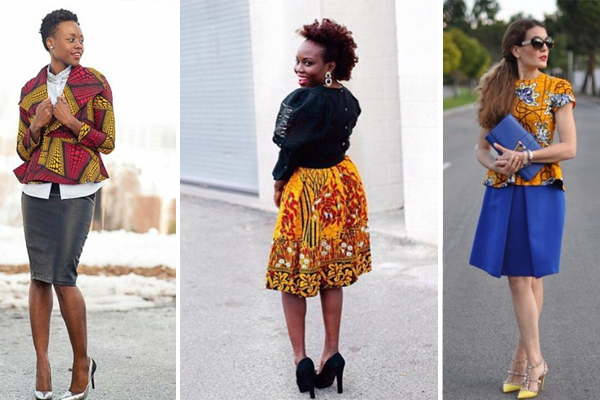
Oh, this shop and its fabulousness! The designer, Rahyma, is queen of amazing maxi skirts! They remind me of 1940s maxi skirts that were often worn on vacations, and they would be a great addition to a vintage wardrobe. There are also a variety of other styles such as dresses, harem pants, and jackets, all of them in vibrantly colored African textiles.

ships from: Washington, D.C., USA
This shop has a HUGE selection of items ranging from clothing to cuff links and accessories. My favorite item is the long pencil skirt below, and there are items to coordinate with anything in your wardrobe! If you're new to incorporating African trends with your vintage style, try switching out some of your bakelite for their chunky African fabric-wrapped bracelets for an intercultural twist on your vintage look.
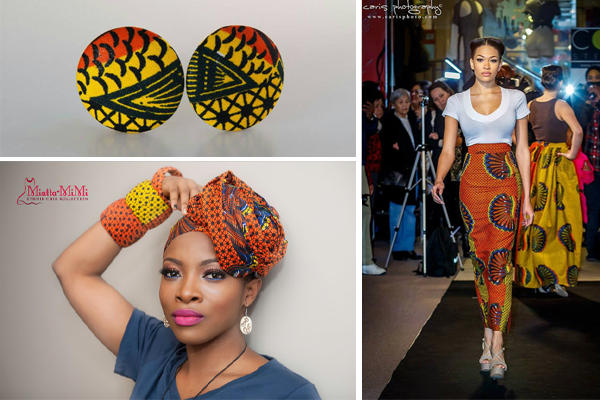
This shop is run by Suzanna, a native to Mombasa (which is one of THE most beautiful beach areas in the world, may I add!). The shop is a beautiful mix of fashion and empowerment, as the shop of 100 people includes people of varying abilities. These artisans use local materials and craftsmanship to overcome physical disabilities and boundaries, becoming fully integrated members of their communities. (Currently orders can be placed via email, but they're working on an online shop that will hopefully be up soon!)

Is there an item from any of these shops that especially calls to you? Have you bought anything from one of these stores or another African shop you would like to recommend?
Similar posts:
6 Native Designs to Wear with Vintage
Antelope Women Earrings
Intercultural Vintage Posts
Similar posts:
6 Native Designs to Wear with Vintage
Antelope Women Earrings
Intercultural Vintage Posts
Controversial Post: Who Can Clap for That Wrap?
23 March 2016
As we've been going through the "Clap for That Wrap" series, I've noticed that some of you have expressed trepidation at trying new head wrap styles because you're afraid of culturally appropriating styles from other cultures.
I won't lie, I find this interesting, and I'm ashamed I didn't think it enough of an issue to address right off! But, hey, better late than never, right? Let's dig into this together!
Two things I think we can all agree on to start (or the vast, vast majority of us at the very least can agree on), is that 1.) The question is not whether or not each of us can or cannot wear head wraps, but which head wraps we can rightly wear, and 2.) Religious head wear (such as specifically Muslim or Sikh styles) should only be worn by the people adhering to those religions or ideals.
Now that we've got that settled, let's get into the not-so-clear part of head wrapping: Who can wear which wraps?
I didn't feel I could bring as well-rounded and diverse a viewpoint that this discussion requires, so I asked for the opinions of others to aid in the discussion. I've also pulled quotes from articles on the subject and included a few more resources at the bottom for your further reading enjoyment and learning!
What are we afraid of?
"I wonder about the history of some vintage styles. They have definitely been inspired by cultures other than dominant Western ones, and even if I'm referencing vintage style, I wonder about cultural appropriation." - Kim Koin
I think most of us are afraid to try certain wraps we're unsure of because we don't want to insult people. We don't want to appropriate from other cultures, and we do want to respect other people groups. We don't want to act out of ignorance and hurt others. I hope Dasha's words will encourage you as we go further:
"But the fact that we all pause and think, 'How can I do this [headwrap] justice?' is a step in the right direction, as opposed to blindly doing things without facing our own ignorance... We're all trying not to offend each other." - Dasha Guyton
Discussion is important, and just asking the question is a show of maturity and awareness.
What wraps are in question?
Most of us probably don't have a problem with anyone wearing a "Rosie the Riveter" style wrap or such styles that are just plain "vintagey" and Western or worn for utility. From what I can tell, many wraps in question for you guys are inspired by black/African (differentiating between these is a whole other conversation we won't get into!) or even Middle Eastern styles. The way the fabric itself is wrapped may be the "iffy" part for some of us, or sometimes the print on the fabric (such as kente cloth or wax prints) may make some of us feel uneasy about trying them. We may even be concerned after watching wrap tutorial videos if the person in them doesn't look like us.
Who needs to question their wrap styles?
Unless you can clearly, unambiguously connect yourself to a particular wrap style as far as culture or history goes (such as being a Nigerian wearing a Nigerian wrap), then you should do an evaluation before wearing. This evaluation is not limited to a particular race, culture or people. Anyone borrowing a wrap style that can be attributed to another culture should ask themselves if it is alright to wear, just as a starting point. The answer may differ from situation to situation or person to person, but most of us are going to need to start by asking, "Am I the person to wear this wrap?"
So how do I evaluate?
"El-Amin Naeem argues that the practice of headwrapping came before some religions, for practical reasons, such as keeping hair clean and blocking sand from the nose and mouth. 'No one group owns it. You decide for yourself,' El-Amin Naeem says." - from this article
My top 5 tips for deciding which head wraps to wear:
1. Do research. Is this wrap style originating from a certain people group, religion, or era? Does the fabric's print have a name or signify something?
2. If it originates from a certain group, has that group expressed their opinion on "outsiders" wearing the style? Is there someone from that people group you can ask for insight, or articles that may share their thoughts on it? (If you discover through several resources that they really don't want "outsiders" wearing it... don't do it. If it seems ambiguous, use your best judgement and keep evaluating with the questions below.)
3. Are you at least knowledgeable enough about the wrap or fabric to be able to converse about it and show a basic understanding of its roots? Honestly, if you aren't willing to do a five minute google search on a wrap or fabric that belongs to another culture, you don't deserve to wear it. Yep, I'll be that blunt.
4. If it's not exactly a traditional wrap, is it a version "inspired by" or very similar to a wrap claimed by a cultural group? Is there a version you can buy that would support the community it originates from? If not, are you willing to support a company that has knocked it off without giving credit?
5. What do designers say? Look at shops that sell head wraps. Do they feature anyone that looks like you wearing their products? If not, is there any information on their social media profiles or website that express their views on people outside their group buying and wearing their products? (I found this IG post from the feed of @thewraplife to be a good example.)
6. Do you ROCK IT?! After all the evaluating, this is the question it all comes down to... Does it flatter you? Do you feel downright amazing in it?! If so, rock it!
While I have my ways of evaluating for myself which wrap styles I wear, I also wanted to share some tips and thoughts from others on how they decide what wraps they should and should not don:
"Head wraps have existed in all cultures for aeons, but we have to be mindful that cultural relativism actually shifts over time. What projected one way decades ago projects in another today. I think it's today we are concerned with, not yesterday--even as this is a vintage clothing discussion site. We don't live in the past, and regarding racism and sexism, we sure as hell wouldn't want to."
- Robin Edgerton
"IMO, as long as you are not wearing a culturally significant textile or wearing a religious turban, I think it's ok to wrap a scarf or fabric and tie it on your head. I generally stick to solid fabrics or pattern scarves that are in no way culturally tied."
- Aly Rose of Aly Rose Vintage
"One thing Westerners and Western culture can do is stop acting like they found a novel fashion piece whenever they are rocking African items, head wrap or otherwise. It happens so often and is so offensive. Arbitrary 'tribal print' headscarves and clothing sold in stores like Forever 21 sometimes have them with patterns that are African and, of course, Africa is not given the due credit when it is advertised. It’s just a cool 'new' trend. Knowing the history of the continent and how it has been (and continues to be) pillaged and colonized, the very least they can do is acknowledge and respect the origin of those fabrics and buy from African designers. At the end of the day, people are going to do what they want to do, but I would prefer that non-African people wear African fabrics for reasons other than 'it looks cool.' That will challenge people to actually research the history of what they are wearing, perhaps even to the point that they would rather not wear it out of respect. When in doubt, my advice is to wear the fabric if you’re invited by someone in the culture to do so (wedding, etc.)."
- Mary of Verily Merrily Mary
"It can be done right by doing your homework. If I'm going to showcase my love for Indian culture, African culture etc, I'm going know the appropriate names and origins. This doesn't mean I don't have the right to style it or wear it in a nontraditional way but being prepared to say, 'Oh thank you, I love this kente print too,' as opposed to saying, 'African,' shows your respect for its roots...
[Black women], too, have to ask ourselves if it would be offensive to our culture or anyone else's. After all, Africans and African-Americans have a tumultuous history. We have to face the elephant in the room and ask ourselves if we are selling out by mimicking the style of ancestors who sold us into slavery?"
- Dasha Guyton
"I don't think it's appropriation if you are not wearing a religious turban, and you are taking care to wear an ethnic wrap with respect to the culture. Especially if you're supporting the local designers of color. Rock your head wrap!"
- Nisha Miles
"Don’t wear a wrap just so you can say you’re 'pro-black' or something… Don’t do it because you have a political reason. Do it because you really like it, because you appreciate the ability it gives you in creating a new look for you."
- Aziza Lynn, aka "The Bargain Beauty"
"It's hard to decide what is appropriation and what is not, especially in the arts (fashion included) because being influenced by other ideas and cultures is natural. I think one of the big red flags that we can all agree on is taking culture (in this case fashion) from another culture and using it without regard for the context or claiming it as your own. Women from all over the world and from many parts of history have used a variety of wraps and ties all throughout history to keep their hair neat and off of their neck, as well as for religious and modesty reasons. I think the head wrap is a challenging issue because it's not strictly used by one culture or only for religious dress. I'm not sure what the right answer is for head wraps, but it seems to me like the fact that we're having the conversation means that everyone's intentions are in the right place."
- Allison Dyke
So, readers, what about you? Are there head wrap styles you feel nervous about trying? How do you decide which wraps to wear? Has any of these people's insight changed your thoughts on what you would wear?
Extra reading:
How A Head Wrap Taught Me An Important Lesson About Professionalism And Race
The Curious History of "Tribal" Prints
IG conversation on @thewraplife feed
Black America, Please Stop Appropriating African Clothing and Tribal Marks
In Order for Black Americans to Appropriate African Culture...
Culture Is Not Costume
Under wraps: Style savvy Muslim women turn to turbans
You're Wearing That Out?: My Family's Disdain for Headwraps and Why I'm Embracing Them
The African American Woman's Headwrap: Unwinding the Symbols
I won't lie, I find this interesting, and I'm ashamed I didn't think it enough of an issue to address right off! But, hey, better late than never, right? Let's dig into this together!
 |
| @flashbacksummer |
Now that we've got that settled, let's get into the not-so-clear part of head wrapping: Who can wear which wraps?
I didn't feel I could bring as well-rounded and diverse a viewpoint that this discussion requires, so I asked for the opinions of others to aid in the discussion. I've also pulled quotes from articles on the subject and included a few more resources at the bottom for your further reading enjoyment and learning!
 |
| @flashbacksummer |
"I wonder about the history of some vintage styles. They have definitely been inspired by cultures other than dominant Western ones, and even if I'm referencing vintage style, I wonder about cultural appropriation." - Kim Koin
I think most of us are afraid to try certain wraps we're unsure of because we don't want to insult people. We don't want to appropriate from other cultures, and we do want to respect other people groups. We don't want to act out of ignorance and hurt others. I hope Dasha's words will encourage you as we go further:
"But the fact that we all pause and think, 'How can I do this [headwrap] justice?' is a step in the right direction, as opposed to blindly doing things without facing our own ignorance... We're all trying not to offend each other." - Dasha Guyton
 |
| "... head coverings will always have a place in society." - Dasha Guyton |
Discussion is important, and just asking the question is a show of maturity and awareness.
What wraps are in question?
Most of us probably don't have a problem with anyone wearing a "Rosie the Riveter" style wrap or such styles that are just plain "vintagey" and Western or worn for utility. From what I can tell, many wraps in question for you guys are inspired by black/African (differentiating between these is a whole other conversation we won't get into!) or even Middle Eastern styles. The way the fabric itself is wrapped may be the "iffy" part for some of us, or sometimes the print on the fabric (such as kente cloth or wax prints) may make some of us feel uneasy about trying them. We may even be concerned after watching wrap tutorial videos if the person in them doesn't look like us.
Who needs to question their wrap styles?
Unless you can clearly, unambiguously connect yourself to a particular wrap style as far as culture or history goes (such as being a Nigerian wearing a Nigerian wrap), then you should do an evaluation before wearing. This evaluation is not limited to a particular race, culture or people. Anyone borrowing a wrap style that can be attributed to another culture should ask themselves if it is alright to wear, just as a starting point. The answer may differ from situation to situation or person to person, but most of us are going to need to start by asking, "Am I the person to wear this wrap?"
So how do I evaluate?
"El-Amin Naeem argues that the practice of headwrapping came before some religions, for practical reasons, such as keeping hair clean and blocking sand from the nose and mouth. 'No one group owns it. You decide for yourself,' El-Amin Naeem says." - from this article
 |
| "You decide for yourself." - Zarinah El-Amin Naeem |
1. Do research. Is this wrap style originating from a certain people group, religion, or era? Does the fabric's print have a name or signify something?
2. If it originates from a certain group, has that group expressed their opinion on "outsiders" wearing the style? Is there someone from that people group you can ask for insight, or articles that may share their thoughts on it? (If you discover through several resources that they really don't want "outsiders" wearing it... don't do it. If it seems ambiguous, use your best judgement and keep evaluating with the questions below.)
3. Are you at least knowledgeable enough about the wrap or fabric to be able to converse about it and show a basic understanding of its roots? Honestly, if you aren't willing to do a five minute google search on a wrap or fabric that belongs to another culture, you don't deserve to wear it. Yep, I'll be that blunt.
4. If it's not exactly a traditional wrap, is it a version "inspired by" or very similar to a wrap claimed by a cultural group? Is there a version you can buy that would support the community it originates from? If not, are you willing to support a company that has knocked it off without giving credit?
5. What do designers say? Look at shops that sell head wraps. Do they feature anyone that looks like you wearing their products? If not, is there any information on their social media profiles or website that express their views on people outside their group buying and wearing their products? (I found this IG post from the feed of @thewraplife to be a good example.)
6. Do you ROCK IT?! After all the evaluating, this is the question it all comes down to... Does it flatter you? Do you feel downright amazing in it?! If so, rock it!
While I have my ways of evaluating for myself which wrap styles I wear, I also wanted to share some tips and thoughts from others on how they decide what wraps they should and should not don:
"Head wraps have existed in all cultures for aeons, but we have to be mindful that cultural relativism actually shifts over time. What projected one way decades ago projects in another today. I think it's today we are concerned with, not yesterday--even as this is a vintage clothing discussion site. We don't live in the past, and regarding racism and sexism, we sure as hell wouldn't want to."
- Robin Edgerton
"IMO, as long as you are not wearing a culturally significant textile or wearing a religious turban, I think it's ok to wrap a scarf or fabric and tie it on your head. I generally stick to solid fabrics or pattern scarves that are in no way culturally tied."
- Aly Rose of Aly Rose Vintage
 |
| Mary of Verily Merrily Mary |
- Mary of Verily Merrily Mary
 |
| @alyrosevintage |
[Black women], too, have to ask ourselves if it would be offensive to our culture or anyone else's. After all, Africans and African-Americans have a tumultuous history. We have to face the elephant in the room and ask ourselves if we are selling out by mimicking the style of ancestors who sold us into slavery?"
- Dasha Guyton
"I don't think it's appropriation if you are not wearing a religious turban, and you are taking care to wear an ethnic wrap with respect to the culture. Especially if you're supporting the local designers of color. Rock your head wrap!"
- Nisha Miles
"Don’t wear a wrap just so you can say you’re 'pro-black' or something… Don’t do it because you have a political reason. Do it because you really like it, because you appreciate the ability it gives you in creating a new look for you."
- Aziza Lynn, aka "The Bargain Beauty"
 |
| "The bigger the knot, the better you feel." - Aziza Lynn, aka The Bargain Beauty |
- Allison Dyke
So, readers, what about you? Are there head wrap styles you feel nervous about trying? How do you decide which wraps to wear? Has any of these people's insight changed your thoughts on what you would wear?
Extra reading:
How A Head Wrap Taught Me An Important Lesson About Professionalism And Race
The Curious History of "Tribal" Prints
IG conversation on @thewraplife feed
Black America, Please Stop Appropriating African Clothing and Tribal Marks
In Order for Black Americans to Appropriate African Culture...
Culture Is Not Costume
Under wraps: Style savvy Muslim women turn to turbans
You're Wearing That Out?: My Family's Disdain for Headwraps and Why I'm Embracing Them
The African American Woman's Headwrap: Unwinding the Symbols
This Is My Church Khanga
18 March 2016
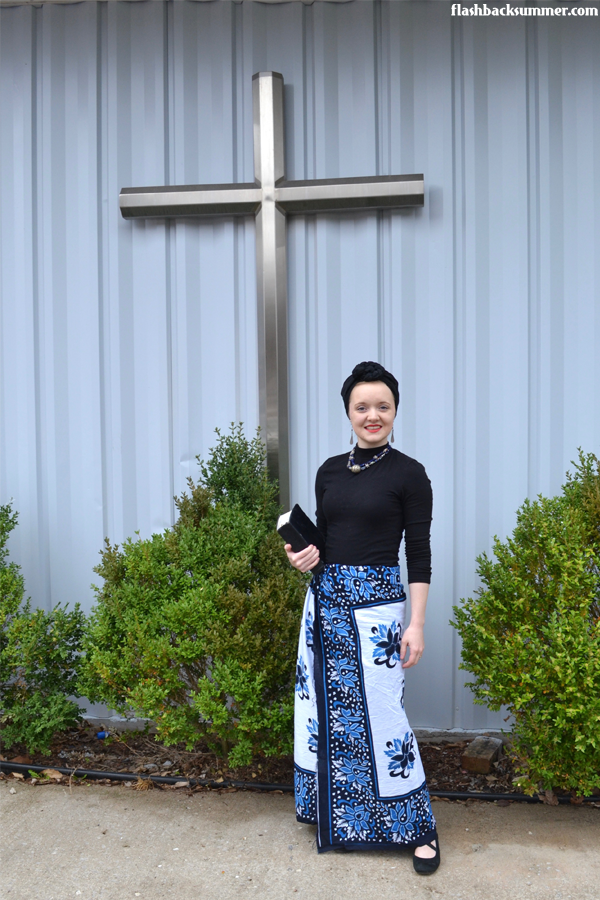
To celebrate Easter this month, my intercultural church has decided to wear our "garments of praise"... aka, traditional clothing from around the world!
9 Ways to Style a Kaftan
01 February 2016
Today Regina of Australian online boutique Camilla is sharing a post about styling one of my favorite garments: the kaftan/caftan! The kaftan originates in the Middle East, but its popularity has spread to other cultures and now similar garments are worn all over the world. They were especially popular in the West in the 10s, 20s and 70s, and here are some tips for working them into your own wardrobe!
There is no other garment on this earth that is as versatile as a kaftan. From early morning errands to a day at the beach; date night, a formal event or a relaxing night at home, the kaftan is there for any occasion. With so many events where the kaftan can be worn, we thought we would come up with a list of different ways you can style a kaftan so your fashion sense can be as versatile as this garment! |
| Beverly Johnson in Harper's Bazaar, 1975 (source) |
For a day of errands, turn into a street style queen by wearing a long kaftan with a bold print. You can keep the accessories to a minimum here and let the pattern talk. Pair the kaftan with a sandal and look effortless throughout the day.
 |
| Moyra Swan in 1969 Vogue UK, Photo by David Bailey (source) |
When you want to accentuate your waist while wearing a Kaftan, go for a thin belt or a ribbon and highlight the tiniest part of your body. Play around with the belt or ribbon – tie the belt at the back or make a bow at the front with your ribbon for a whimsy touch.
 |
| 1960, photo by John French (source) |
Pair a short caftan or tunic with cigarette pants and kitten heels for a modern-gal-on-the-go look. Wear a turtleneck underneath to winterize it.
 |
| Missoni in Vogue August 1977 (source) |
There is something very romantic about knitwear when it is paired with flowy garments. Next time you want to channel your inner romantic, pair your long flowy kaftan with an Aran jumper or a soft cashmere sweater and cozy up on those chilly summer nights.
 |
| Fortuny stenciled silk gauze wrap, c. 1920 (source) |
Layer a sheer kaftan over a more fitted piece for an elegant look, especially if you're worried about opaque kaftans adding too much bulk. You can accessorize it for daywear or evening wear just by switching out accessories and shoes!
 |
| Vogue 1978 (source) |
The kaftan is perfect for the beach. Pair a short kaftan with short shorts and flats, with a hold-all bag on your shoulder and bold sunglasses you will be armed for a long day at the beach.
 |
| Elizabeth Taylor (source) |
Next time you have a formal event, take out your best pair of heels and that shimmering clutch bag; put on your statement necklace and turn your kaftan into a stunning evening gown. Elizabeth Taylor did it, so it's gotta be a good style choice.
 |
| 1970s McCall's 2377 (source) |
If it is a buttoned up kaftan you are rocking, then leave it unbuttoned and pair it up with shorts, a crop top and espadrilles for a classic beach or summer look. Bonus points for a tassled hood.
 |
| Regina Mode, August 1967 (source) |
If you are as bold as a fashion editor when it comes to style, then don't be afraid of glamorous metallics and embellishments. The kaftan has never been a subtle garment, so feel free to let loose when choosing one!
Author Bio: A fashion afficianado, Regina empowers women through her writing and fashion tips. If she’s not walking her dog, you can catch her surfing the web for what’s new at Camilla.
Have you ever worn a kaftan? How would you style one for your own life?
This is a sponsored post. For more information about my sponsorship practices, check out my policies page.
This is a sponsored post. For more information about my sponsorship practices, check out my policies page.
Subscribe to:
Posts (Atom)


